Group Policy Management & GPO Creation
An introduction to Group Policy in Windows Server Active Directory, with step-by-step guides on GPO creation, administrative template configuration, and workstation policy enforcement.
Conceptual Overview
1. What is Group Policy?
Group Policy lets you push settings to groups of users or computers from one place in an Active Directory (AD) environment, instead of configuring each machine by hand.
The settings cover a lot of ground: security baselines like password complexity, account lockout policies, and firewall rules, as well as user-facing tweaks like desktop backgrounds, software installs, or blocking access to specific system tools.
2. Lab Objective
The objective of this lab is to create and enforce a Group Policy Object (GPO) to restrict specific user actions on client computers.
- Goal: Create a GPO, configure user administrative templates to remove system shutdown/restart options, link the GPO to the
CST170Organizational Unit, and verify the policy enforcement on a client workstation.
Materials & Prerequisites
- Domain Controller: Windows Server configured with Active Directory Domain Services (AD DS) and Group Policy Management Console (GPMC) installed.
- Client Machine: Windows 10 client host joined to the
rajkumar.localdomain. - Target Container: An active Organizational Unit (OU) (e.g.,
CST170) containing the test user accounts.
Step-by-Step GPO Implementation Walkthrough
Summary of GPO Procedure
| Step | Action | Description |
|---|---|---|
| 1 | Open GPMC | Launch the Group Policy Management Console in Server Manager. |
| 2 | Locate OU Container | Navigate to the target Organizational Unit (CST170). |
| 3 | Create & Link GPO | Create a new GPO ("New Policy Rajkumar") linked directly to the OU. |
| 4 | Open GPO Editor | Open the Group Policy Management Editor for the new GPO. |
| 5 | Configure Settings | Enable the "Remove and prevent access to Shut Down/Restart" administrative template. |
| 6 | Verify Link | Confirm that the GPO link is active and enabled for the OU. |
| 7 | Client Verification | Log in to the client workstation, update policy, and verify the missing options. |
Phase 1: GPO Creation & Linking
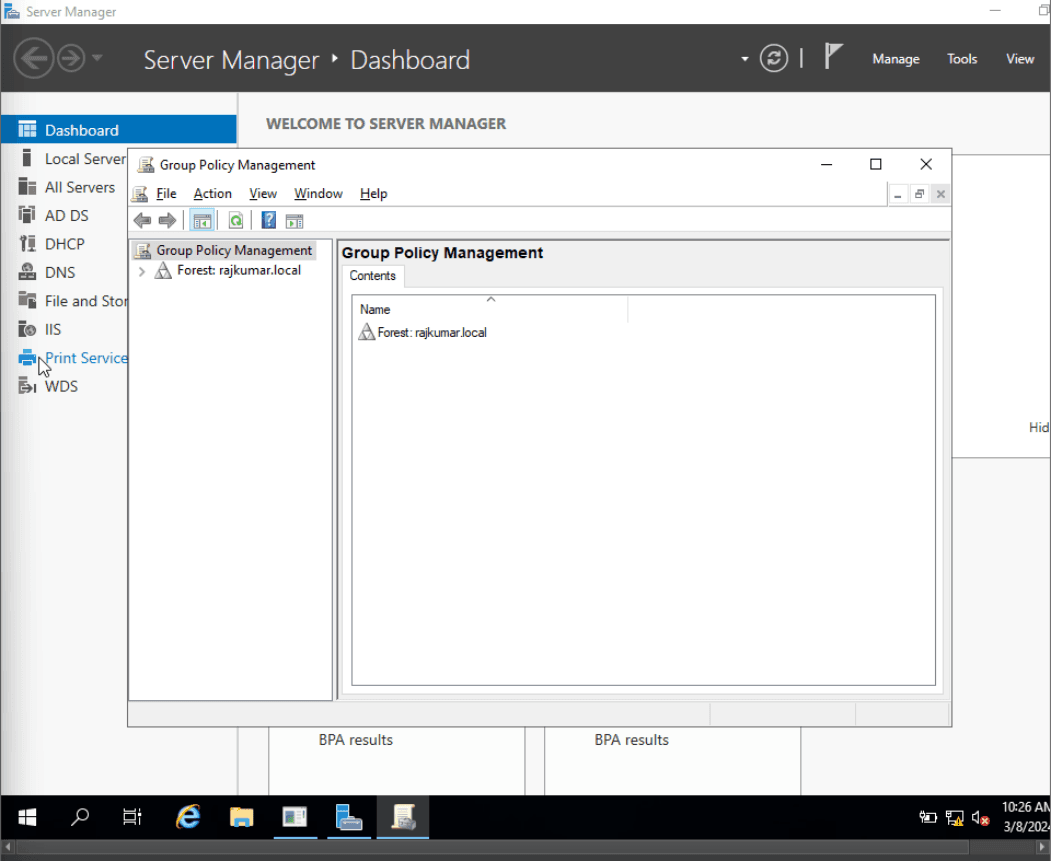
Step 1: Open Group Policy Management Console (GPMC)
Log in to the Domain Controller. Open Server Manager, click on Tools in the top-right corner, and select Group Policy Management to open the management console.
Step 2: Locate the Target Container
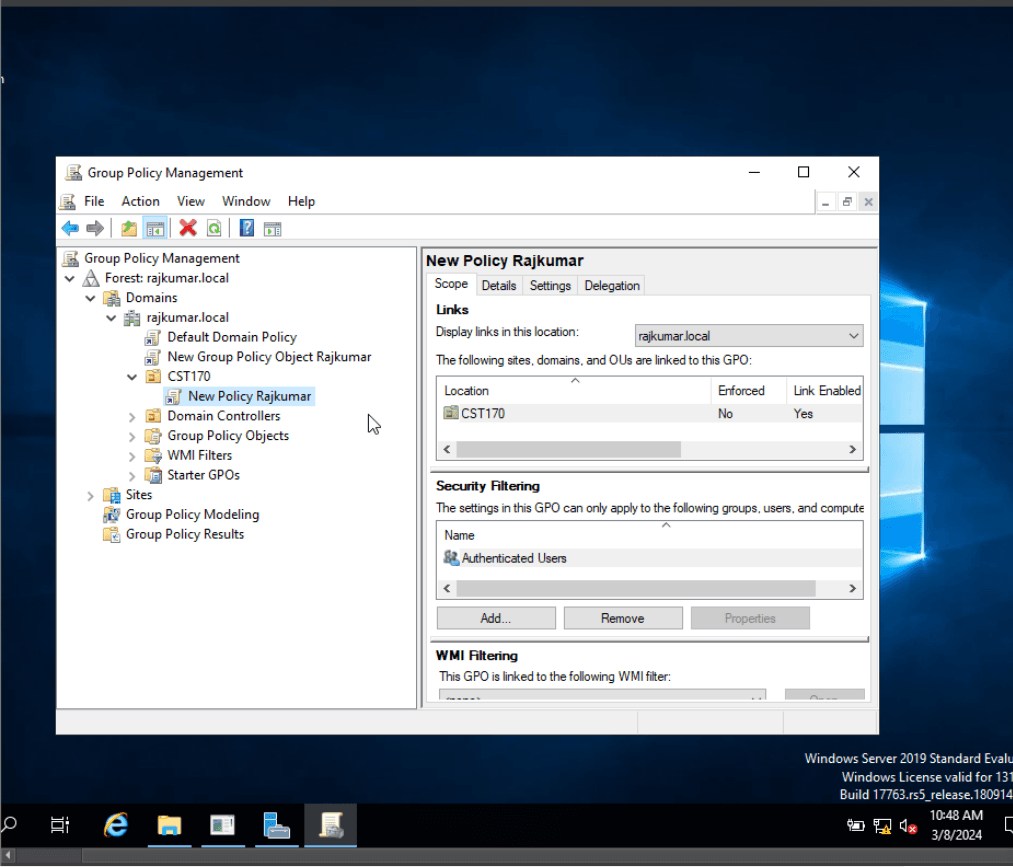
Expand the console tree: Forest: rajkumar.local > Domains > rajkumar.local. Locate the Organizational Unit where the policy will be applied (e.g., CST170).
Step 3: Create a GPO and Link It Here
Right-click on the CST170 OU and select Create a GPO in this domain, and Link it here.... In the dialog box, name the GPO (e.g., New Policy Rajkumar) and click OK.
Phase 2: Policy Settings Configuration
Step 4: Open Group Policy Management Editor (GPME)
Right-click the newly created GPO under the CST170 OU and select Edit to open the Group Policy Management Editor.
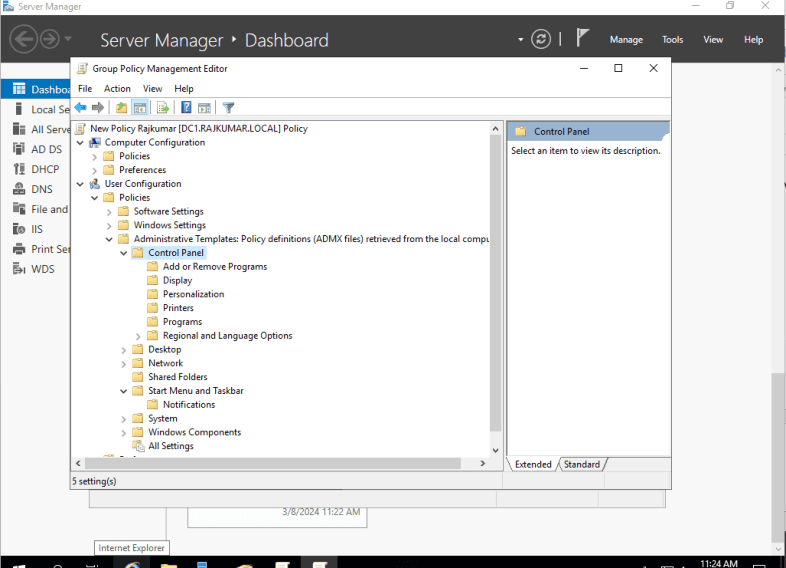
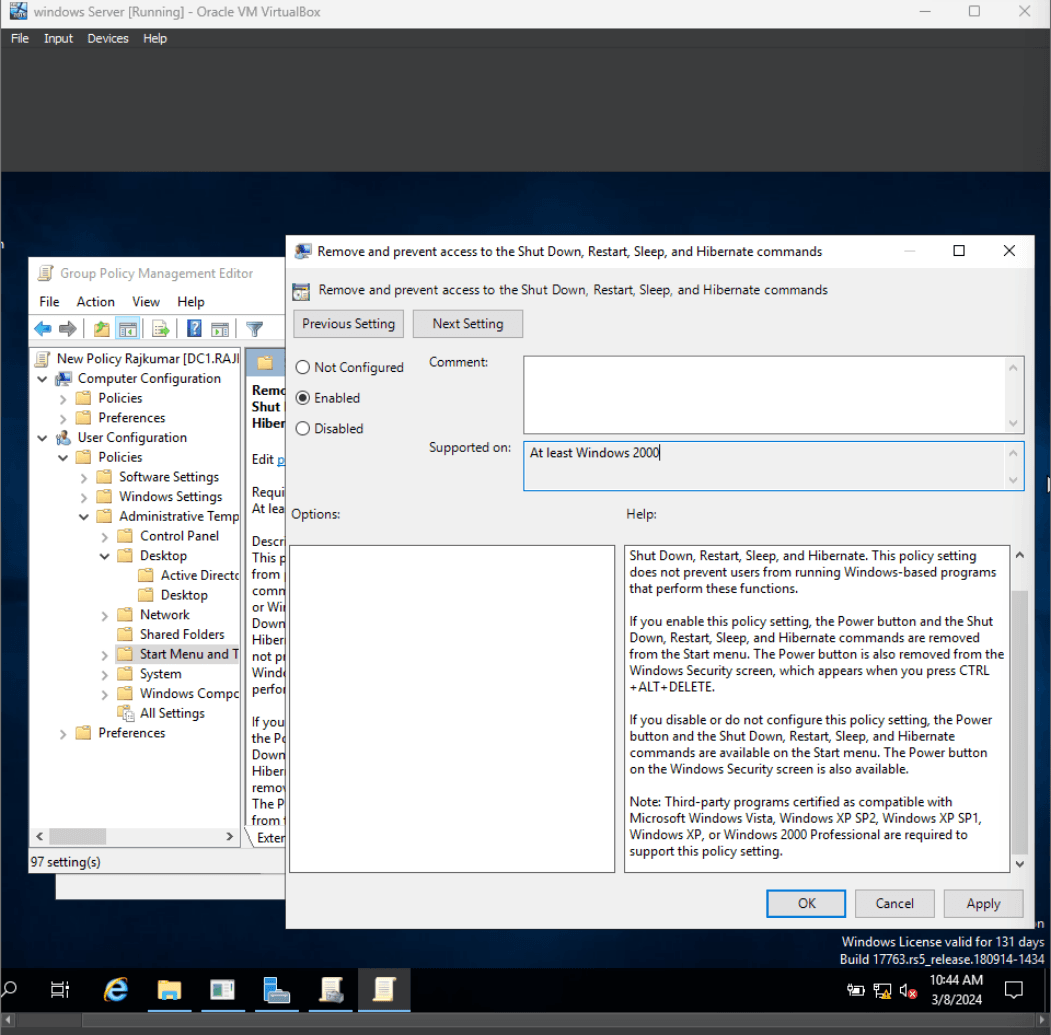
Step 5: Configure the Administrative Template
In the GPME console, navigate to the following path under User Configuration:
User Configuration > Policies > Administrative Templates > Start Menu and Taskbar
Locate the setting: Remove and prevent access to the Shut Down, Restart, Sleep, and Hibernate commands. Double-click it, change the setting to Enabled, and click OK.
Phase 3: Enforcing & Testing the Policy
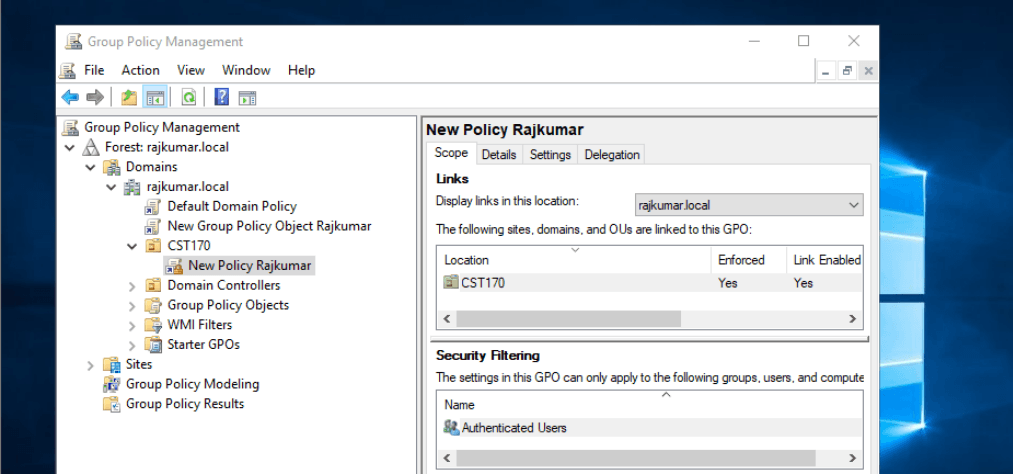
Step 6: Verify and Enforce GPO
Go back to the Group Policy Management Console. Ensure that the GPO is linked to the CST170 OU and its status shows Link Enabled. If needed, right-click the link and select Enforced to prevent lower-level containers from overriding the setting.
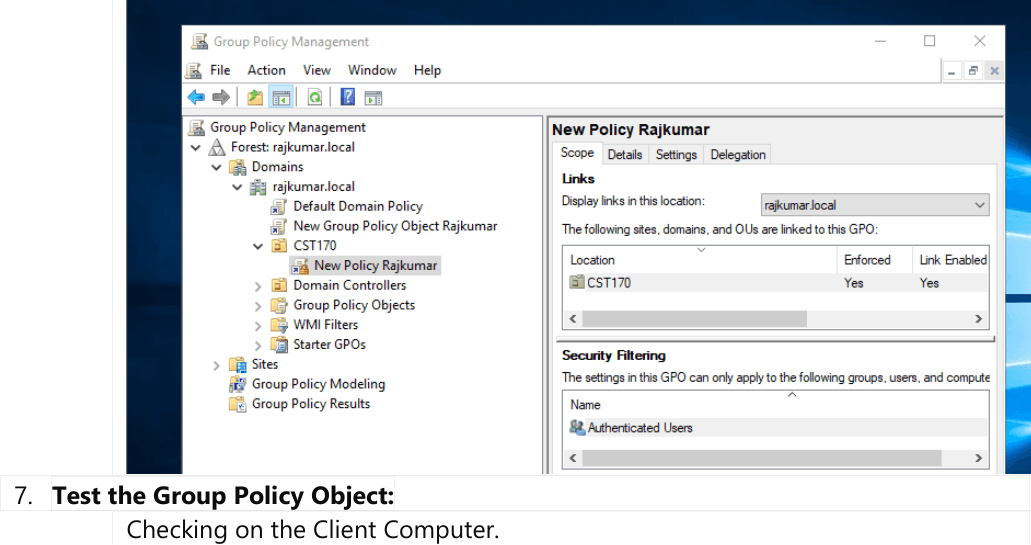
Step 7: Test Policy on the Client Workstation
- Log in to the Windows 10 client host using a domain user account that resides in the
CST170OU. - Open Command Prompt and run
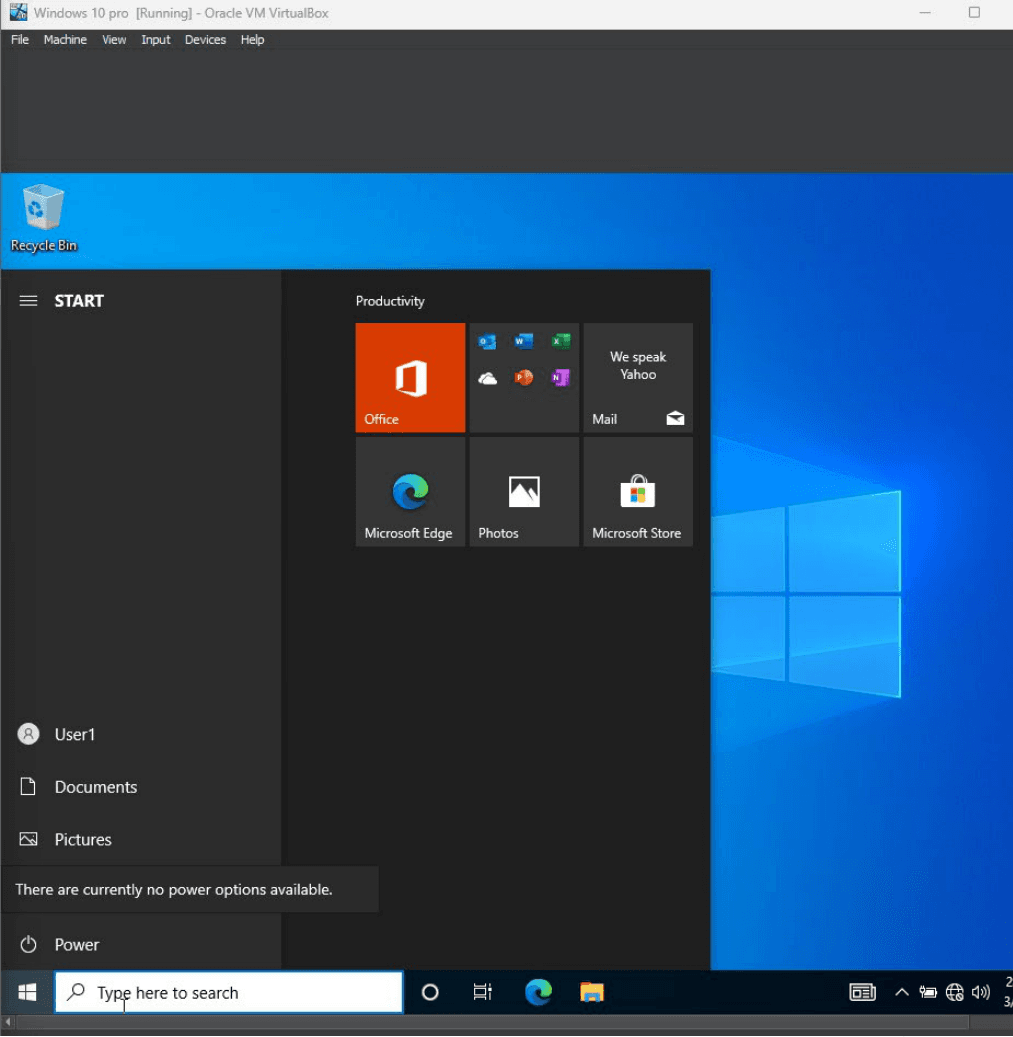
gpupdate /forceto immediately pull the new GPO configurations from the Domain Controller. - Open the Start Menu, click the Power icon, and verify that the power options (Shut Down, Restart, Sleep, Hibernate) have been removed, displaying the message "There are currently no power options available."
DHCP Server Installation & Configuration
A step-by-step guide to installing the DHCP Server role on Windows Server, setting up IP scopes and exclusion ranges, and configuring dynamic IP leasing on a Windows 10 host client.
Centralized Software Deployment
Automating software installation and remote management from a Domain Controller to member servers using PowerShell remoting, administrative shares, and silent installers.